Friday, 21 September 2018

Ensure integrity between the Govt. and CSO through meaningful Youth Participation


Naimul Islam, from Bangladesh, is a young delegate has attended at the High level Political Forum (HLPF) of UN in New York last June.
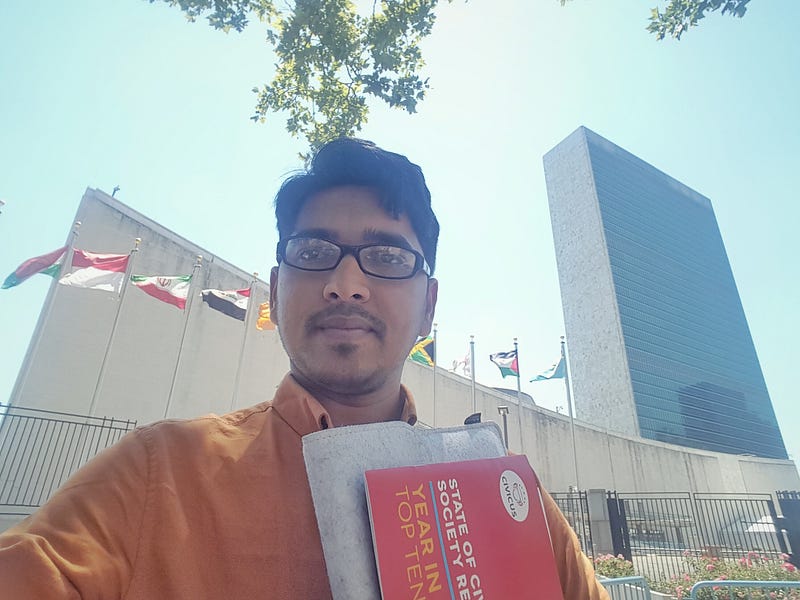

He is a member of Bangladesh Model Youth Parliament and European M.Sc in Marine Environment and Resources, Spain with Erasmus Mundus Scholarship.
In HLPF, he urged to ensure integrity between the government and the civil society through meaningful Youth Participation towards achieving Sustainable Development Goals (SDGs).

It was Tuesday July 10 in the calendar page, from the morning different feeling was working in my mind. Imagine, Flags of every country flying around a high-rise building and fluttering in front of it. How lovely it is! From an early age, I saw the scene on television. Yes, I was talking about the United Nations Headquarters in New York. A long-cherished dream was fulfilled through participating the United Nations High Level Political Forum (HLPF) 2018.
The HLPF is the UN’s main platform for sustainable development. In the year 2012, the UN High-level Political Forum (HLPF) was constituted to review the sustainable development progress. The HLPF plays a central role in the global development and post-policy for sustainable development agenda 2030.
This 8 days long program was represented by the participation of various government and non-governmental organisations in the world.
It was my great opportunity to represent Bangladeshi young community through the Bangladesh Model Youth Parliament. The organisation is continuing various activities to bring the voice of young people of Bangladesh to the policy level. Also working at the international level, keeping in touch with local and international organisations to achieve sustainable development goals.
Let’s say about the first day. I was already staying in New York. Sohanur Rahman, Chief Executive of Bangladesh Model Youth Parliament, suddenly informed me that, I was nominated to represent the young people of Bangladesh in the High- Level Political Forum at UN Headquarters. I was thrilled to hear the news.
The previous night, I got the desired Ground Pass to enter the headquarters. In the morning when I was entering the United Nations building with all the security gates, I felt like I was Bangladesh!
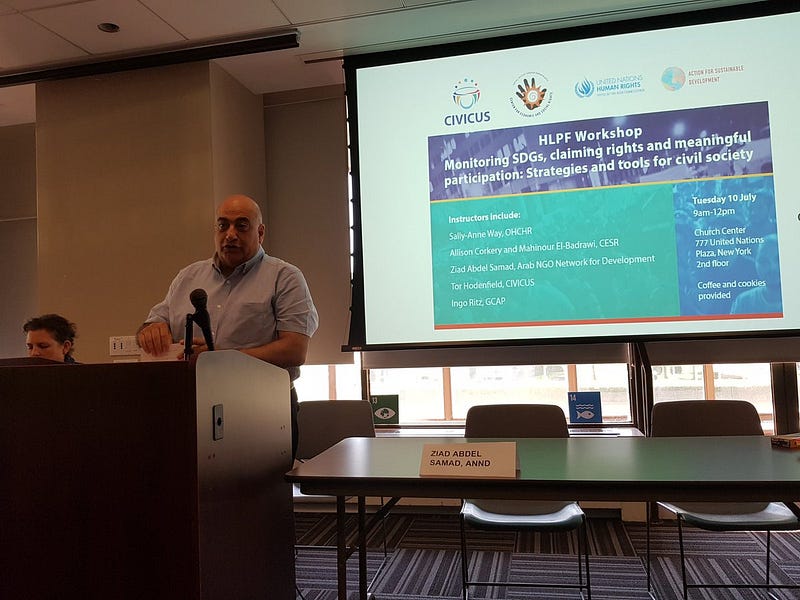

There were several events on July 10th. World Alliance for Citizen Participation -Civicas, Action for Sustainable Development (A4SD) / Global Call to Action against Poverty (GCAP), organized workshops with UN Human Rights High Commissioner’s Office on Monitoring SDGs, claiming rights and meaningful participation: Strategies and tools for civil society. The venue was in the church centre of UN.
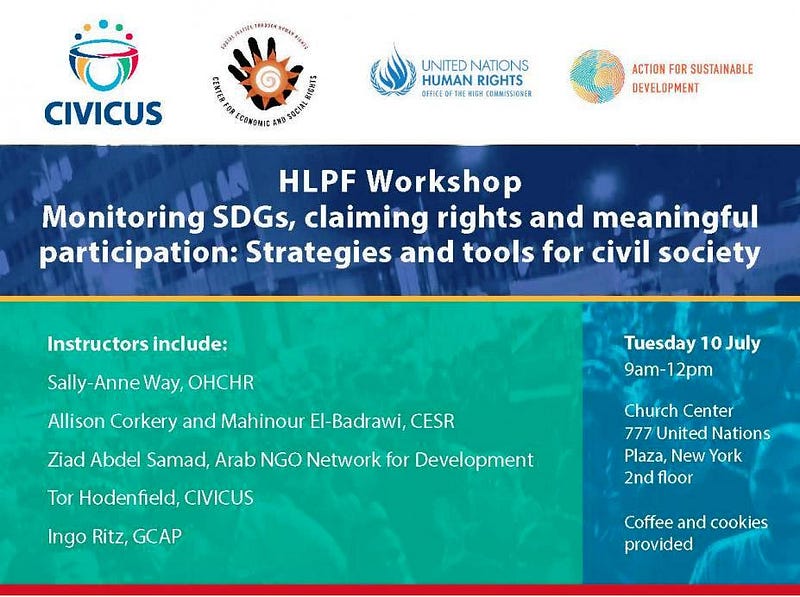

The representative of the UN Human Rights High Commissioner, Sally-Anne did the Opening and Moderation. This workshop highlighted capacity-building, knowledge development and networking, which allowed members of civil society from different countries to share their strategies, tools and experiences, and learn from each other on the best ways to engage in SDG implementation, monitoring and review at the national, regional and international levels.
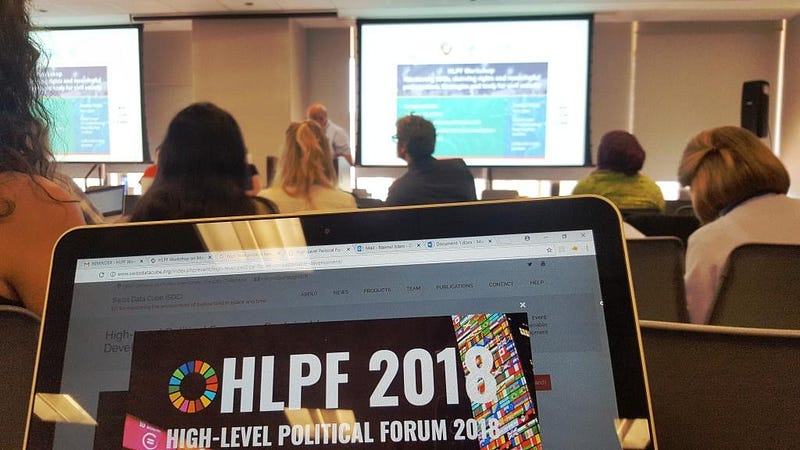

I have discussed about Bangladesh contribution to ensure human right and Rohingya issue. Although we have challenged the implementation of safe water supply and sewerage system in Rohingya camps, Honourable Prime Minister Sheikh Hasina has provided humanitarian shelter to the oppressed refugees Rohingya.
I also expressed my view on how to ensure integrity between the government and the civil society through meaningful participation of young peoples.
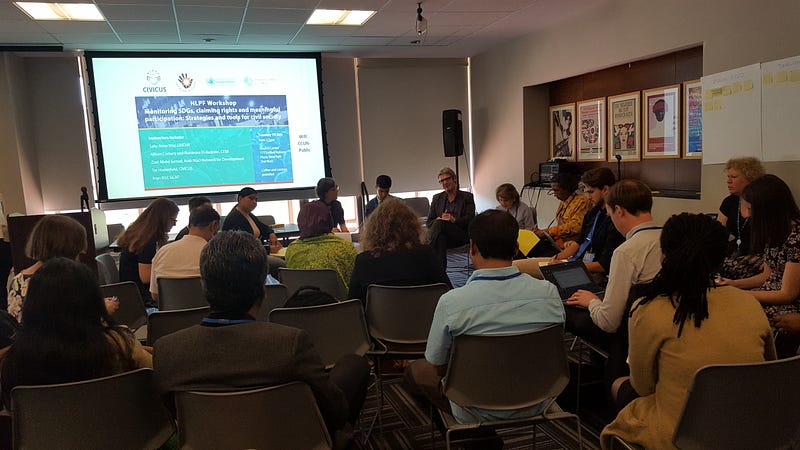

After the event, I met the visiting dignitaries from different countries discussed on various issues.
After the lunch, from 1:30 pm to pm, one side event about effect of climate change on forests, water and aquatic resources was held at the conference of the United Nations Headquarters.
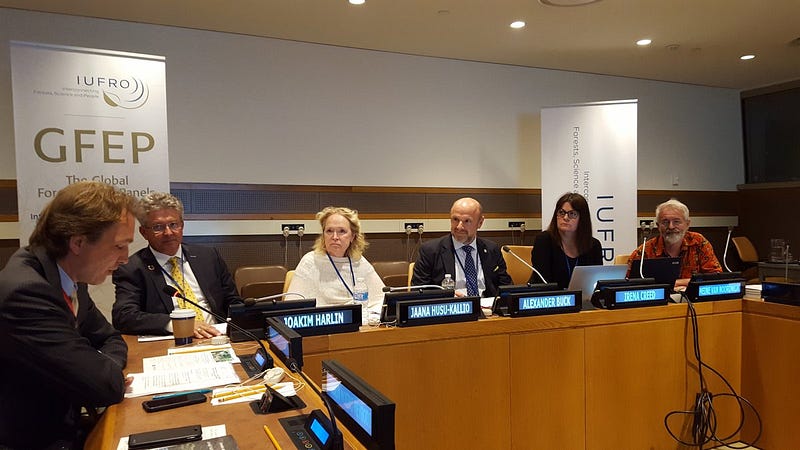

The event titled, ‘Forests and Water on a Changing Planet: Scientific Insights for Building Sustainable and Resilient Societies,’ launched the Global Forest Expert Panel assessment report, ‘Forest and Water on a Changing Planet: Vulnerability, Adaptation and Governance Opportunities,’ which addresses, among other things, the climate-forest-water-people nexus.
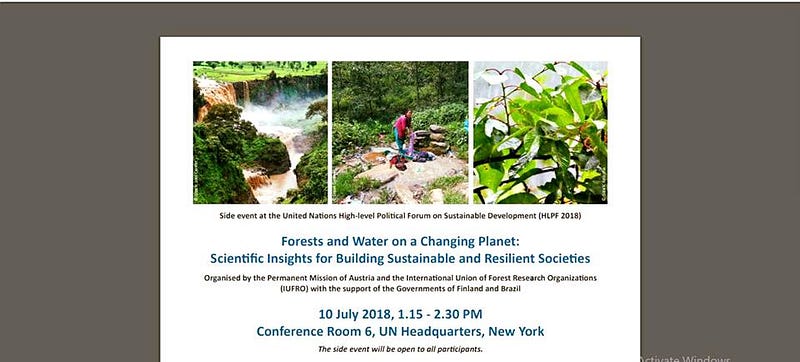

It organised by the permanent mission of the Austria in the United Nations, the International Forest Research Union and the official representative of Brazil and Finland.
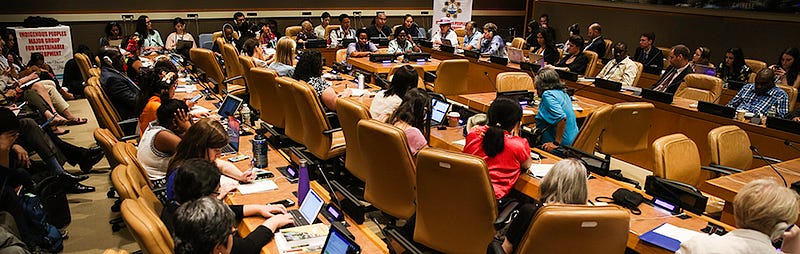

As a student of Marine Biology and working as Climate Activist, I took an active interest in this event. Speakers highlighted links between SDG 6 and SDG 15, including through SDG 6 target 6.6 (protect and restore water-related ecosystems). There were detailed discussions on how to create an adaptive society to face climate change induced impact on forests and water.
Approximately 75% of the world’s water supply comes from forested watersheds.
During the event, speakers highlighted that: approximately 75% of the world’s water supply comes from forested watersheds; forest ecosystems have strong inter-linkages with the SDGs; and a stronger forest-water link can help policymakers make sound decisions.
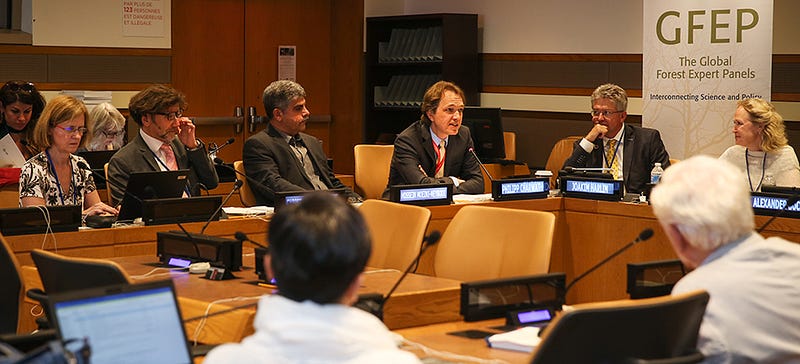

Austrian permanent representative Philip Charlath, United Nations Senior Forest Policy Officer, delivered the welcome speech. Along with other issues, experts also discussed about Goal 14 of SDGs; Conserve and sustainability use the oceans, seas and marine resources for sustainable development.
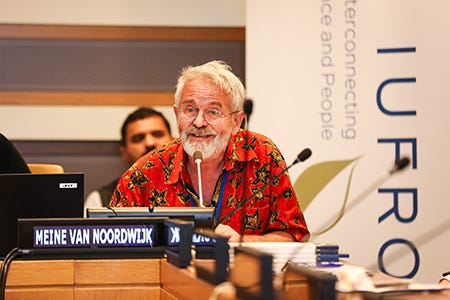

GFEP Co-Chair Meine van Noordwijk, World Agroforestry Centre (ICRAF) and Wageningen University, said forests play a role in modifying rainfall and climate in a manner not captured under the UNFCCC. GFEP Co-Chair Irena Creed, University of Saskatchewan, stressed the need for new institutional and governance frameworks to optimize climate-forest-water management.
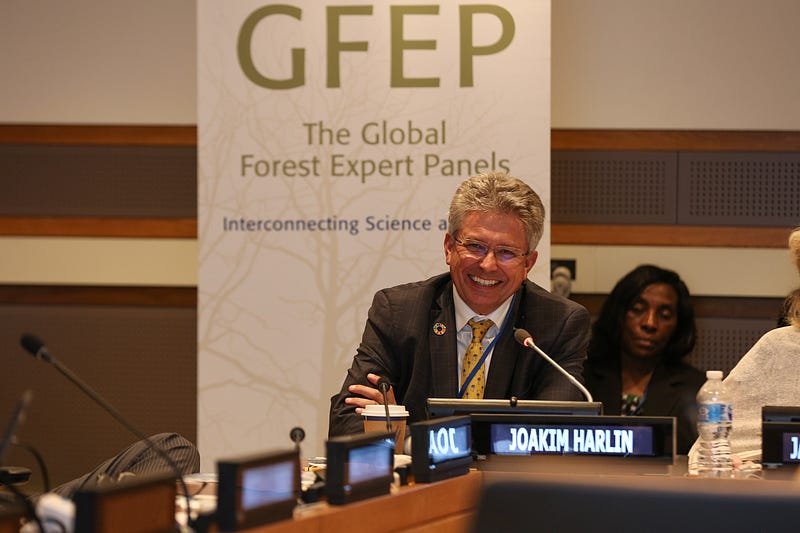

Joakim Harlin, UN Environment Programme (UNEP, or UN Environment) and UN-Water Vice-Chair, noted links between SDG 6 (clean water and sanitation) and SDG 15, including through SDG 6 target 6.6 (protect and restore water-related ecosystems). One participant suggested developing a synthesis report on SDG 6 and SDG 15 for the next HLPF.
Jaana Husu-Kallio, Permanent Secretary, Ministry of Agriculture and Forestry, Finland, emphasised the need to move from silo-type thinking, saying the biggest challenge is to reorganise and think from the nexus point of view. He said Finland’s development policy “One world, common future” takes forests and water into account.
During the ensuing discussion, topics included: lack of reference to water during HLPF interventions on SDG15; the need for a multi-sectoral and multi-disciplinary approach; inadequate training in hydrology in many countries; engagement of the private sector; the role of food security; and the possibility of developing a synthesis report that combines SDG6 and SDG15 for the next HLPF to provide informed policy advice.
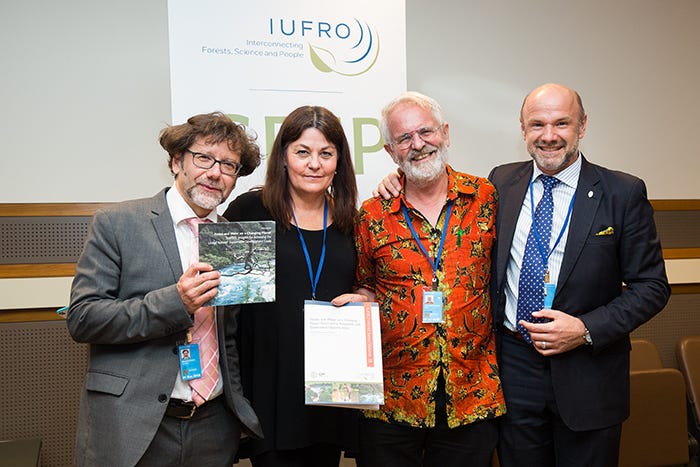
Displaying the newly launched GFEP report and policy brief — L-R: Christoph Wildburger, IUFRO; Irena Creed, University of Saskatchewan; Meine van Noordwijk, World Agroforestry Centre (ICRAF) and Wageningen University; and Alexander Buck, IUFRO

In this 8 -days long program, 6 SDGs were reviewed, 8 special events, 25 subject- matter meetings, 260 side events, 33 exhibitions and various events were organised with 2200 registered participants.
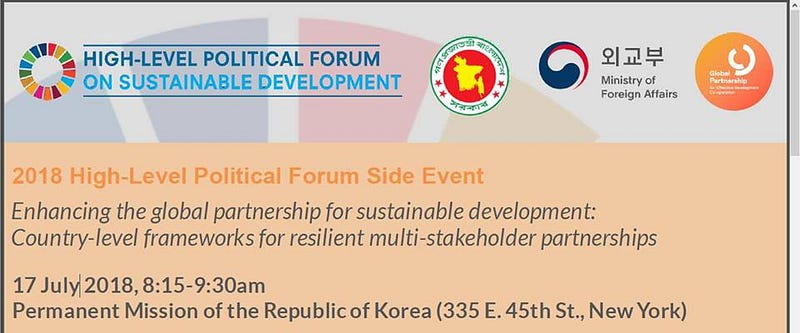

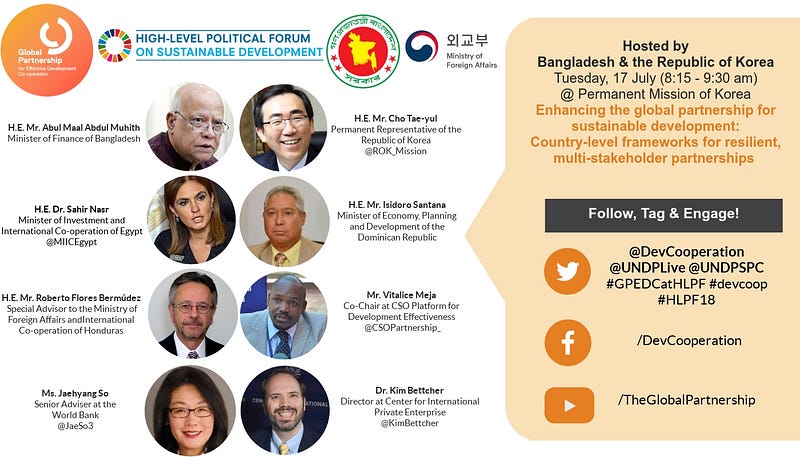
Several side events also organized from the Bangladesh side. Governments of Bangladesh and Republic of Korea was hosted one side event “Enhancing the global partnership for sustainable development: Country-level frameworks for resilient multi-stakeholder partnerships” on 17 July 2018 in the margins of the High-Level Political Forum on Sustainable Development (HLPF) at the Permanent Mission of the Republic of Korea to the United Nations in New York.
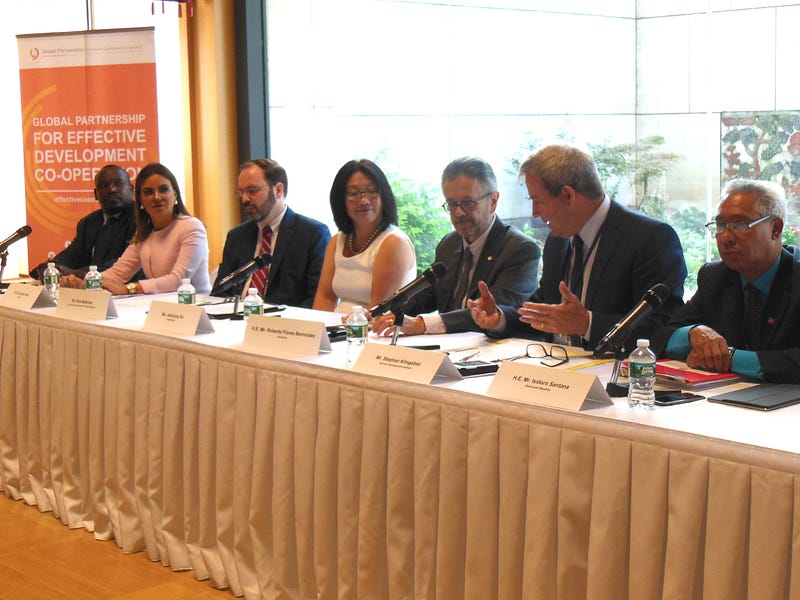
Panelists (left to right): Mr. Vitalice Meja (CPDE), H.E. Dr. Sahir Nasr (Egypt), Dr. Kim Bettcher (CIPE), Ms. Jaehyang So (World Bank), H.E. Mr. Roberto Flores BermÃēdez (Honduras), Mr. Stephan Klingebiel (DIE) and H.E. Mr. Isidoro Santana (Dominican Republic)

The side event provided a platform for open dialogue around the key opportunities and challenges for building more inclusive institutional frameworks and evidence-based discussions on on ways to strengthen country-level partnerships between a wide variety of development stakeholders.
Bangladesh’s Minister of Finance, H.E. Mr. Abul Maal Abdul Muhith was the keynote speaker in a meeting held at Millennium Hilton Hotel in the United Nations Headquarters. He told the success story of Bangladesh how the country turned around in today’s position from LDC. He recognised that to leave no one behind and meet global promises by 2030, we need to effectively engage all relevant stakeholders in development policy- making, planning and implementation, much like Bangladesh’s own local consultative processes and spaces for open dialogue and coordinated policies.

The side event generated evidence-based dialogue, with a wide array of panelists presenting including Ministers from the Dominican Republic and Egypt, representatives from the government of Honduras, civil society (CSO Partnership for Development Effectiveness), private sector (Center for International Private Enterprise), and multi-lateral institutions (World Bank). The discussions led an honest debate around how country-level, multi-stakeholder partnerships can help implement the SDGs and how they might be reflected in VNRs.

Discussion centred around the importance of establishing multi-stakeholder institutional frameworks for sustainable development at the country level, and the ways in which partnerships could be strengthened and expanded in order to increase development effectiveness and contribute to achievement of the 2030 Agenda.
At this discussion, Bangladesh’s permanent representative and ambassador to the United Nations, Masud Bin Momen and other diplomats were present.
The event attracted over 100 participants from governments, international organisations, civil society, private sector and academia, among others to discuss good practices and progress on institutionalising multi-stakeholder frameworks at the country level to increase the effectiveness of co-operation and support achievement of the Sustainable Development Goals (SDGs)..
Due to the busyness, I was not available directly to the following programs but had not missed-out on the opportunity to provide feedback from virtually present. High-level Political Forum was something special for me. A great deal of experience at international level, representing own country, expressing views, getting acquainted with new people etc made my days.
The dream of experiencing the United Nations was came true by direct collaboration of Bangladesh Model Youth Parliament. The experience gained by representing the youth of the country in the United Nations is a great achievement. It was matter of great pride that in every session to highlight Bangladesh in front of the whole world and highlight the possibilities of young people of my country.
Significant part of the total manpower of Bangladesh is young, between 15 and 30 years of age. There is a lot of investment required to make this young community as resources. Through this, the youth will have to be created as entrepreneurs.
In the future, I want to work with these youth resources, together we can build a self-reliant prosperous Bangladesh.

Sunday, 15 April 2018

Developed countries must do climate technology transfer to developing countries

Active Citizens Youth Leader Sohanur Rahman have actively joined the Commonwealth Youth Forum during CHOGM 2018 to build cross-cultural connections, debate the challenges faced by young people & agree youth-led initiatives to influence decision-makers and ensure a youth voice in future. In CYF, he urged to developed countries must take responsibility for their historic emissions and contribute the funds and transfer of technologies to developing countries needed to help avoid dangerous climate change.

The Commonwealth Heads of Government Meeting 2018, also known as CHOGM 2018, was the 25th meeting of the heads of government of the Commonwealth of Nations. It was held at London city in the United Kingdom. Overall, 47 out of 53 Commonwealth states were represented at the summit by their heads of government, with foreign ministers being the most senior attendees of the remaining countries.
Out of 4 themes, climate change and sustainability were one of the key points of the whole discussion in the Youth Forum, especially in regard to small state members, Climate vulnerable country like Bangladesh of the Commonwealth.
The theme of the summit was “Towards a Common Future”. The British hosts set out four main goals for the summit was 1. Prosperity: boosting intra-Commonwealth trade and investment; 2. security: increasing cooperation across security challenges including global terrorism, organized crime and cyber attacks; 3. fairness: promoting democracy, fundamental freedoms and good governance across the Commonwealth and 4. Sustainability: building the resilience of small and vulnerable states to deal with the effects of climate change and other global crises.
Ambassador Prince Harry’s inspiring speech at the opening of the Commonwealth Youth Forum
The Commonwealth Youth Forum started 16 April morning with a keynote speech from HRH Prince Harry, Youth Ambassador for the Commonwealth, at the QEII Centre, Westminster-London and there are positive echoes from inspiring people about how the youth are working together. He mentioned, “60% of the Commonwealth is under the age of 30 and at 1.4 billion strong, it is you who are going to change the world.”
Patricia Scotland, Commonwealth Secretary-General, Danny Faure, President of Seychelles, Rt Hon Damian Hinds, UK Secretary of State for Education, Anna Barker, Chair of British Youth Council, Jayathma Wickramanayake, United Nations Secretary General’s Envoy on Youth and Kishva Ambigapathy, Chair, Commonwealth Youth Council also addressed there.
United Nations Secretary General’s Envoy on Youth mentioned, ` We (Young people) are the first generation to ending poverty and last generation to tackling Climate Change.’’
Other agendas were plenary discussions, Commonwealth Youth Council Election Hustings, action-planning sessions and A Welcome to UK Reception with the keynote speech from HRH the Duke of Cambridge and a performance from popular singer Ellie Goulding.
THE DUKE OF CAMBRIDGE SPEAKS AT THE “WELCOME TO THE UK” RECEPTION, PART OF THE CHOGM (KENSINGTON PALACE)
Prince William made a short speech at the beginning of the evening, sharing that: “The Commonwealth has rightly been described as “the mother of all networks” . There is no other organisation on earth that marries politics with the civil society and the networks that the Forums represent. You represent millions of diverse voices, so use your combined intellect and creativity to challenge the status quo and to push the boundaries of what Commonwealth is capable of.”
“My purpose here on stage tonight is to welcome you to the United Kingdom, and I am delighted to do so,” he said. “If I may, though my duty is to formally welcome you on behalf of the whole country, I wanted to extend a personal note of welcome too.”
On the second day, morning stated with high-level Joint Forums plenary while UK Prime Minister Theresa May talked about the Blue-charter agreement, a landmark to guide nations in sustainable ocean development. She mentioned ‘ The Commonwealth’s Blue Charter will set in train ambitious and coordinated worldwide action to will help make our oceans cleaner now and in the future. Our Cyber Declaration will make a real difference to our safety and security. Our investments in education will allow young people the world over to fulfil their potential. Our work to boost resilience will protect our smaller members from the ravages of natural disasters. And our commitment to fight malaria will blaze a trail for the world to follow, and in doing so save countless lives for generations to come.’
Bill Gates discussed his amazing health accomplishments within the Commonwealth. He said, “As a Commonwealth, you are young. Young people are critical — they are innovators & innovation changes what’s possible. As long as we invest in young people they will innovate in ways we never thought possible”.
Patricia Scotland QC, Commonwealth Secretary-General underlined the need to transform creativity in inclusiveness into actions that can clearly help the Commonwealth build a more prosperous shared future.
As a panellist, Andrew Holness, Prime Minister of Jamaica motioned that, Overnight GDP may wipeout due to climate-induced disasters and climate change is not the only environmental issue, it’s also economical issue’’. The discussion largely addressed the need for active participation of all stakeholders including young people in sustaining a green planet.
After that, Karuna Rana, Commonwealth Youth Climate Change Network facilitated a session while Helen Clark, former prime minister of New Zeeland delivered a keynote speech highlighting youth roles on Paris agreement implementation. Panellists also discussed the importance of sustainability in making our planet carbon-free and improving on the health of our oceans.
In this session, I have urged to “developed” countries to reducing emissions with capacity support, technology transfer and climate finance for “developing’’ vulnerable countries who are the innocent victim of climate change. He also highlighted that, International community should ensure guarantee at least US$100 billion per year of predictable, measurable and transparent public funding for climate change adaptation and mitigation in developing countries by 2020. Financing on adaptation needs to focus on the most vulnerable groups and communities including children, women and people with disabilities when determining funding allocations, and ensure these groups are meaningfully engaged in adaptation programme development. This means meaningful and equal engagement of young people and adolescents in adaptation decision-making, implementation and monitoring at local and national levels.
In this day Bangladeshi young delegates have talked with Prime minister Sheikh Hasina after Women Forum where she emphasized on promoting girls education to pathway preventing child marriage. Having an exciting courtesy meeting with Bangladesh Prime minister young delegates joined the Commonwealth Big lunch event with a wonderful opportunity to discover and celebrate their connections, experiences and stories.
On the final day (18 April) of the 11th Commonwealth Youth Forum, the young people of the Commonwealth finalized their declaration, follow-up actions, expressing their policy recommendations to Heads of Government and action plan for the Commonwealth Youth Council.
Protecting the environment and Climate Change issue have dominated the agenda at the youth forum. This outlines the practical recommendations made by the young people of the Commonwealth, which have been adopted by the Commonwealth Youth Council’s General Assembly in support of promoting a more prosperous, secure, sustainable and fair future, including integration of UNSCR 2250 national levels, the use of sport for development and peace and calls for cybersecurity legislation.
Overall, 3 days long Commonwealth Youth Forum was exciting, inspiring and energetic at the end. Various action planning and capacity building Sessions, activities, discussions will help the young people to make our world more sustainable, tackling youth unemployment, countering extremism, creating an equal and inclusive society and ensuring a more secure future for all. We will make a positive use of technology to build relationships with our communities, nations and across the globe. After all, we all united in one desire to make our world a better, safer, justice and green place for all.
Before joining this forum, I was quite clueless what the role of youth in the Commonwealth. So, this has been amazing and meeting a majority of the inspiring young people, the next leaders and hearing from them, putting forward Bangladesh Youth views and receiving an incredible opportunity to be in the presence of Members of the Royal family and Heads of Government including our honorable Prime Minister Sheikh Hasina whilst discussing themes of Prosperity, Sustainability, Fairness and Security in our communities. In the discussion of the forum, we have spoken very clearly on what we want by participating in discussions and action planning sessions.
At the Commonwealth Youth Forum, We have explored the mechanism to strength youth-led action on climate initiatives and the enhancement of youth participation and leadership in climate policy implementation framework at all levels, including the implementation of the Paris Agreement and Commonwealth Blue Charter. Queen’s ambassador to commonwealth HRH Prince Harry also emphasized the importance of youth leadership platforms at the Commonwealth Youth Forum.
By joining this CYF, I have gain vast knowledge and skills. This forum enabled me more politically active at global diplomacy and has our Active Citizen’s work recognized outside our country. For shaping a common future, this forum has really opened my eyes to see what the Commonwealth offers to the young people and what changes need to be made. It also allowed me to build new networks across the globe to serve young people in my motherland Bangladesh & beyond. Geographical boundaries and Time zones are now meaningless as young people are increasingly connected through the internet and social media. So we can now work towards a fairer, more secure and more prosperous future.

Wednesday, 21 February 2018

`āĻŦিāĻļ্āĻŦāϜু⧜ে āĻŦাংāϞা, āĻ­াāώাāϰ āĻŦিāĻ•ৃāϤি āĻĒ্āϰāϤিāϰোāϧে āϏোāϚ্āϚাāϰ āϤāϰুāĻŖ āϏāĻŽাāϜ āφāĻŽāϰা'


āĻŦāϰিāĻļাāϞ āĻ•েāύ্āĻĻ্āϰীāϝ় āĻļāĻšিāĻĻ āĻŽিāύাāϰ āĻĒ্āϰাāĻ™্āĻ—āĻŖে āϚাāϰুāĻ•āϞাāϰ āĻĻে⧟াāϞāϚিāϤ্āϰে āĻĢুāϟে āωāĻ েāĻ›ে āϤāϰুāĻŖ āϏāĻŽাāϜেāϰ āϏোāϏ্āϝাāϞ āĻŽিāĻĄি⧟া⧟ āĻ­াāώা āĻŦিāĻ•ৃāϤি 

 āϏোāĻšাāύুāϰ āϰāĻšāĻŽাāύ : ‘āĻŦাāĻšাāύ্āύāϤে āĻŽুāĻ–েāϰ āĻ­াāώা āĻ•িāύāĻ›ি āĻŦুāĻ•েāϰ āĻ–ুāύে āϰে/ āĻŦāϰāĻ•āϤেāϰা āϰāĻ•্āϤ āĻĻিāĻ›ে āĻŦিāĻļ্āĻŦ āĻ…āĻŦাāĻ• āĻļুāύে āϰে,/ āĻĻিāĻ›ি āϰāĻ•্āϤ āϜāύ্āĻŽাāĻŦāϧি āϏাāĻ—āϰ-āϏাāĻ—āϰ āύāĻĻী-āύāĻĻী/ āϰāĻ•্āϤে āĻŦাংāϞা āϞাāϞ āĻ•āχāϰাāĻ›ি  āĻāχ āĻ•āĻĨা āϤো āĻŽিāĻĨ্āϝা āύ⧟।/  āĻĻাāĻŽ āĻĻি⧟ে āĻ•িāύেāĻ›ি āĻŦাংāϞা āĻ•াāϰো āĻĻাāύে āĻĒাāĻ“ā§Ÿা āύ⧟/ āĻĻাāĻŽ āĻĻিāĻ›ি āĻĒ্āϰাāĻŖ āϞāĻ•্āώāĻ•োāϟি āϜাāύা āφāĻ›ে āϜāĻ—ā§ŽāĻŽā§Ÿ।’’- āĻ—ীāϤিāĻ•াāϰ āĻ“ āϏুāϰāĻ•াāϰ āφāĻŦāĻĻুāϞ āϞāϤিāĻĢেāϰ āĻāχ āĻ—াāύāϟিāχ āĻŦāϞে āĻĻে⧟ āĻ•āϤāϟা āĻ—āϰ্āĻŦেāϰ āϧāύ āφ’āĻŽāϰি āĻŦাংāϞা āĻ­াāώা। 

āĻ—োāϟা āϧāϰীāϤ্āϰিāϰ āĻŦāĻšু āĻ­াāώাāĻ­াāώীāϰ āĻŽāϧ্āϝে āĻļুāϧুāĻŽাāϤ্āϰ āφāĻŽাāĻĻেāϰ āĻŦাāĻ™āϞিāϰাāχ āĻŦুāĻ•েāϰ āϤাāϜা āϰāĻ•্āϤ āĻĻি⧟ে āĻŽা⧟েāϰ āĻ­াāώা⧟  āĻŽুāĻ–েāϰ āĻ•āĻĨা āĻŦāϞাāϰ āĻ…āϧিāĻ•াāϰ āφāĻĻা⧟ āĻ•āϰে āĻ—ā§œেāĻ›ে āϏোāύাāϞী āχāϤিāĻšাāϏ। āĻļেāĻ•āϞ āĻ­াāĻ™া āϟāĻ—āĻŦāĻ—ে āĻŦাংāϞা āĻŽা⧟েāϰ āĻĻাāĻŽাāϞ āĻ›েāϞেāϰ āĻĻāϞ ā§§ā§Šā§Ģ⧝ āĻŦāĻ™্āĻ—াāĻŦ্āĻĻেāϰ ā§Žāχ āĻĢাāϞ্āĻ—ুāύ āĻ…āϰ্āĻĨাā§Ž ⧧⧝ā§Ģ⧍’āϰ āĻāĻ•ুāĻļে āĻĢেāĻŦ্āϰু⧟াāϰি āϏāĻ•াāϞে āϏāĻ•āϞ āĻŦাāϧা-āĻŦিāĻĒāϤ্āϤি āφāϰ āϭ⧟āĻ•ে āϜ⧟ āĻ•āϰে āϰাāϜāĻĒāĻĨে āύেāĻŽেāĻ›িāϞ āĻŦāϞেāχ āφāϜ āφāĻŽāϰা āĻ—āϰ্āĻŦেāϰ āϏাāĻĨে āĻŦāϞāϤে āĻĒাāϰি, ‘āφāĻŽি āĻŦাংāϞাāĻ­াāώী, āĻŦাংāϞা āφāĻŽাāϰ āĻŽাāϤৃāĻ­াāώা।’ 
Image may contain: 6 people, people smiling

 āĻ­াāώা āφāύ্āĻĻোāϞāύেāϰ āĻŽাāϧ্āϝāĻŽে āϝে āϏংāĻ—্āϰাāĻŽ āĻ—ো⧜া āĻĒāϤ্āϤāύ āĻšā§ŸেāĻ›িāϞ āϤা  āĻļিāĻ•্āώা āφāύ্āĻĻোāϞāύ, ā§Ŧ āĻĻāĻĢাāϰ āϏ্āĻŦাāϧীāĻ•াāϰ āφāύ্āĻĻোāϞāĻŖ āĻšā§Ÿে āϰুāĻĒ āύে⧟ āϏ্āĻŦাāϧীāύāϤাāϝুāĻĻ্āϧে। āĻļেāώাāĻŦāϧি ⧧⧝⧭⧧-āĻ āύ⧟ āĻŽাāϏেāϰ āϰāĻ•্āϤāĻ•্āώ⧟ী āĻŽুāĻ•্āϤিāϝুāĻĻ্āϧেāϰ āĻĒāϰ āύāϤুāύ āĻĻেāĻļ āĻ—āĻ āύেāϰ āĻŽāϧ্āϝ āĻĻি⧟ে āĻļেāώ āĻšā§Ÿ। āĻĒ্āϰāϤিāώ্āĻ িāϤ āĻšā§Ÿ āĻŦাংāϞাāĻĻেāĻļ āύাāĻŽে āύāϤুāύ āĻāĻ• āĻŽাāύāϚিāϤ্āϰ। āφāĻŽāϰা āϏ্āĻŦাāϧীāύāϤাāϝুāĻĻ্āϧে āĻŦিāϜ⧟ āϞাāĻ­ āĻ•āϰে āĻāĻ•āϟি āϏ্āĻŦাāϧীāύ āϏাāϰ্āĻŦāĻ­ৌāĻŽ āϰাāώ্āϟ্āϰেāϰ āύাāĻ—āϰিāĻ• āĻšāĻ“ā§Ÿাāϰ āϝোāĻ—্āϝāϤা āĻ…āϰ্āϜāύ āĻ•āϰি।

 ā§§ā§¯ā§¯ā§¯ āϏাāϞেāϰ ā§§ā§­ āύāĻ­েāĻŽ্āĻŦāϰ āχāωāύোāϏ্āĻ•ো ⧍⧧ āĻĢেāĻŦ্āϰু⧟াāϰিāĻ•ে āφāύ্āϤāϰ্āϜাāϤিāĻ• āĻŽাāϤৃāĻ­াāώা āĻĻিāĻŦāϏ āĻšিāϏেāĻŦে āϏ্āĻŦীāĻ•ৃāϤি āĻĻে⧟া⧟ āĻ­ৌāĻ—োāϞিāĻ• āϏীāĻŽাāϰেāĻ–া āĻ…āϤিāĻ•্āϰāĻŽ āĻ•āϰে āĻĒৃāĻĨিāĻŦীāϰ āϏāĻŦ āϜাāϤি-āĻ—োāώ্āĻ ীāϰ āĻŽāϧ্āϝে āĻĻি⧟ে āĻŽাāϤৃāĻ­াāώা āĻŦাংāϞাāϰ āϜāύ্āϝ āĻŦাāĻ™াāϞিāϰ āφāϤ্āĻŽāϤ্āϝাāĻ—েāϰ āĻŽāĻšিāĻŽা āĻ›ā§œি⧟ে āĻĒ⧜েāĻ›ে।

 āϏাāϤ’āĻļ āĻ•োāϟিāϰ āĻ…āϧিāĻ• āĻŽাāύুāώেāϰ āĻšাāϜাāϰো āĻ­াāώাāϰ āĻŽāϧ্āϝে āĻŦাংāϞা  āφāϜ āĻ…āύ্āϝāϤāĻŽ āĻļ্āϰেāώ্āĻ  āĻ­াāώা। āϝে āĻ­াāώা⧟ āĻŦাংāϞাāĻĻেāĻļ, āĻ­াāϰāϤ, āĻĒāĻļ্āϚিāĻŽāĻŦāĻ™্āĻ—, āφāϏাāĻŽāϏāĻš āĻ•িāĻ›ু āĻāϞাāĻ•া⧟ āĻŦাংāϞাāĻ­াāώী āϏāĻš āĻĒৃāĻĨিāĻŦীāϰ āĻĒ্āϰা⧟ ⧍ā§Ģ  āĻ•োāϟি āĻŽাāύুāώ āĻ āĻ­াāώা⧟ āĻ•āĻĨা āĻŦāϞে āĻŽāύেāϰ āĻ­াāĻŦ āĻĒ্āϰāĻ•াāĻļ āĻ•āϰে। āĻŦিāĻļ্āĻŦ āϜু⧜ে āĻ›ā§œি⧟ে āĻ›িāϟি⧟ে āĻĨাāĻ•া āφāϰāĻ“ āĻŦেāĻļ āϏংāĻ–্āϝāĻ• āĻĒ্āϰāĻŦাāϏী āĻŦাংāϞাāĻ­াāώীāϤো āϰ⧟েāĻ›েāύāχ। 

āϤāĻŦে āϏুāĻ–েāϰ āĻŦিāώ⧟ āĻšāϚ্āĻ›ে, āĻŦāϰ্āϤāĻŽাāύে āĻŦাংāϞাāĻĻেāĻļ āĻ›া⧜াāĻ“ āφāĻĢ্āϰিāĻ•াāϰ āĻāĻ•āϟি āĻĻেāĻļ āϏিāĻ“āϰিāϞিāĻ“āύে āϰাāώ্āϟ্āϰ āĻ­াāώা āĻšিāϏেāĻŦে āϏ্āĻŦীāĻ•ৃāϤ āφ’āĻŽāϰি āĻŦাংāϞাāĻ­াāώা। 

āĻšাāύাāĻĻাāϰ āĻĒাāĻ•িāϏ্āϤাāύিāϰা āύাāύা āĻ•ৌāĻļāϞে āϏংāĻ–্āϝাāĻ—āϰিāώ্āĻ  āωāϰ্āĻĻু āϚাāĻĒি⧟ে āĻĻিāϤে āϚে⧟েāĻ›িāϞ, āφāĻŽāϰা āϰāĻ•্āϤ āĻĻি⧟ে āϤা āĻĒ্āϰāϤিāĻšāϤ āĻ•āϰেāĻ›ি। āϏে āĻ•āĻĨা āϝেāĻŽāύি āϏāϤ্āϝ, āϤāĻŦে  āϏāĻŽৃāĻĻ্āϧ āĻ­াāώা āφāύ্āĻĻোāϞāύেāϰ āĻŽাāϧ্āϝāĻŽে āϝে āϰāĻ•্āϤেāϜেāϤা āĻŦāϰ্āĻŖāĻŽাāϞা āĻĒে⧟েāĻ›িāϞাāĻŽ āϤাāϰ āĻĻুāϰাāĻŦāϏ্āĻĨা āĻāĻ–āύ āφāĻŽাāĻĻেāϰ āϏāĻŦাāϰ āĻŦিāϏ্āĻŽā§Ÿেāϰ āĻ•াāϰāĻŖ।
No automatic alt text available.

 āĻ­াāώা āĻšিāϏেāĻŦে āĻŦাংāϞাāϰāϤো āĻāĻ•āϟা āĻĒ্āϰāĻ•ৃāϤ āϰূāĻĒ āĻŦা āĻŽাāύ āϰ⧟েāĻ›ে। āϏেāχ āĻŽাāύ āϏাāĻšিāϤ্āϝেāϰ āĻ­াāώা, āĻļিāώ্āϟাāϚাāϰেāϰ āĻ­াāώা, āĻ­āĻĻ্āϰ āĻ•āĻĨāĻĒোāĻ•āĻĨāύেāϰ āĻ­াāώা, āϞেāĻ–াāĻĒ⧜াāϰ āĻ­াāώা। āφāĻŽāϰা āĻ­ুāϞে āϝেāϤে  āĻŦāϏেāĻ›ি āϝে āĻļুāĻĻ্āϧ āĻ“ āĻĒāϰিāĻļীāϞিāϤ āĻ­াāώা āϚāϰ্āϚা āĻ•āϰা āφāĻŦāĻļ্āϝāĻ•। āϝে āϝেāĻ­াāĻŦে āĻĒাāϰāĻ›ে āĻŦাংāϞাāĻ­াāώাāϰ āĻŦাāϰāϟা āĻŦাāϜাāϚ্āĻ›ে।  

āĻŽোāϟāĻ•āĻĨা āĻšāϚ্āĻ›ে, āĻāϤো āĻĻিāύেāĻ“ āφāĻŽāϰা āĻĻেāĻļেāϰ āϏāϰ্āĻŦāϤ্āϰ āĻŦিāĻļুāĻĻ্āϧ āĻ­াāώা āϚāϰ্āϚাāϰ āĻ•োāύো āĻ•াāĻ াāĻŽো āĻ—ā§œে āϤুāϞāϤে āĻĒাāϰিāύি। āĻāĻŦাāϰāĻ•াāϰ āĻĒ্āϰাāĻĨāĻŽিāĻ• āϏāĻŽাāĻĒāύী āĻĒāϰীāĻ•্āώাāϰ āĻĢāϞ āĻĒāϰ্āϝাāϞোāϚāύা āĻ•āϰে āĻĻেāĻ–া āĻ—েāĻ›ে āĻļিāĻļুāϰা āĻŦাংāϞাāϰ āϚে⧟ে āχংāϰেāϜীāϤে āĻ­াāϞো āĻ•āϰāĻ›ে। āĻŦিāώ⧟āϟি āφāϏāϞেāχ āωāĻĻ্āĻŦেāĻ—েāϰ। āϤāĻŦে āĻŦাāϏ্āϤāĻŦāϤা āĻ­িāύ্āύ।  

āĻŦাংāϞা āĻŽাāϧ্āϝāĻŽে āĻĒ⧜াāĻļোāύা āĻ•āϰāĻŦেāύ, āĻĻাāĻŽ āύেāχ। āĻŦাংāϞা⧟ āϏ্āύাāϤāĻ•োāϤ্āϤāϰ  āĻ•āϰāĻŦেāύ, āĻ­াāϞো āϚাāĻ•ুāϰী āύেāχ। āωāϚ্āϚ āφāĻĻাāϞāϤে āĻŦিāϚাāϰ āϚাāχāϞেāĻ“ āĻāϰ āϰা⧟āϟা āĻĒāϰ্āϝāύ্āϤ āĻŦাংāϞা⧟ āĻĒাāĻŦেāύ āύা। āχংāϰেāϜী āĻĨেāĻ•ে āĻ…āύুāĻŦাāĻĻ āĻ•āϰে āĻŦুāĻে āύিāϤে āĻšāĻŦে। 

āφāϰ āĻŦাংāϞা⧟ āĻ•āĻĨা āĻŦāϞāĻŦেāύ āĻ•িংāĻŦা āĻĢেāϏāĻŦুāĻ•ে āϏ্āϟ্āϝাāϟাāϏ āĻĻিāϞেāύāϤো āφāĻĒāύাāϰ āύিāϜেāϰāχ āϏāĻŦ ‘āχāϏ্āĻŽাāϟāύেāϏ’ āφāϰ ‘āϏোāϏ্āϝাāϞ āϏ্āϟ্āϝাāϟাāϏ’ āϚুāϞো⧟ āϝাāĻŦে। āĻāĻŽāύ āĻāĻ• āĻ•āϰুāύ āĻĒāϰিāϏ্āĻĨিāϤে āϤāϰুāĻŖāĻĻেāϰ āĻ•াāĻ›ে āϟাāύāϤে āĻāĻ• āϜāĻ—াāĻ–িāϚুāϰি āĻŦাংāϞাāϰ āφāĻļ্āϰ⧟ āύিāϚ্āĻ›ে āĻ—āĻŖāĻŽাāϧ্āϝāĻŽ āĻŦিāĻļেāώ āĻ•āϰে āĻāĻĢ āϰেāĻĄিāĻ“ āϜāĻ•িāϰা।  
Image may contain: one or more people
āĻĒ্āϰāϤীāĻ•ী āĻ›āĻŦি 
āωāϚ্āϚāϤāϰ āĻĄিāĻ—্āϰি āĻ…āϰ্āϜāύāĻ•াāϰী āĻŦা āĻĻেāĻļāϏেāϰা āĻļিāĻ•্āώা āĻĒ্āϰāϤিāώ্āĻ াāύে āĻ…āϧ্āϝ⧟āύ āĻ•āϰা āϤāϰুāĻŖ āϏāĻŽাāϜ āφāϜāĻ•াāϞ āφāύা⧜ি āĻĢেāϏāĻŦুāĻ• āĻŦ্āϝāĻŦāĻšাāϰāĻ•াāϰী āĻŦা āĻŽূāϰ্āĻ–-āĻ…āϰ্āϧ āĻļিāĻ•্āώিāϤāĻĻেāϰ āĻŦ্āϝāĻ™্āĻ— āĻ•āϰāϤে āĻ—ি⧟ে āĻāĻ–āύ āϤাāϰা āύিāϜেāϰাāχ āωāĻĒāĻšাāϏেāϰ āĻĒাāϤ্āϰে āĻĒāϰিāĻŖāϤ āĻšāϤে āϚāϞেāĻ›ে। 

āϤাāϰা āĻŦেāĻļ āφāύāύ্āĻĻ āϚিāϤ্āϤে āĻŽāϜা āĻ•āϰেāχ āϞিāĻ–ে āĻĨাāĻ•ে āĻĢāĻĄু, āĻ–িāϚ্āϚা, āĻŽāĻž্āϚা⧟, āĻ—িāĻŦāύে, āĻšāĻĒে, āĻ–িāϚাāχāĻ›ে āĻāĻŽāύ āϏāĻŦ āωāĻĻ্āĻ­āϟ āĻļāĻŦ্āĻĻ āϏ্āϟ্āϝাāϟাāϏ-āĻ•āĻŽেāύ্āϟে āĻĨাāĻ•ে āĻĒ্āϰা⧟ āύি⧟āĻŽিāϤ, āϝা āĻ­āĻŦিāώ্āĻ¯ā§Ž āĻĒ্āϰāϜāύ্āĻŽ āϧāϰেāχ āύেāĻŦে āĻāϟাāĻ“ āĻ­াāώা āĻŦাংāϞা। āĻāχ āĻŦাংāϞিāĻļ āĻ­াāώাāϰীāϤিāϰ āϏাāĻĨে āĻ—ā§œে āωāĻ েāĻ›ে āĻāĻ• āĻŽāύāĻ—ā§œা āĻŦিāĻ•ৃāϤ āĻŦাংāϞাāĻ­াāώাāϰ āĻ•াāϞāϚাāϰ। āϝাāϤে āĻ—া āĻ­াāϏি⧟ে āĻĻিāϚ্āĻ›ে āφāĻŽাāĻĻেāϰ āϤāϰুāĻŖ āĻĒ্āϰāϜāύ্āĻŽ। 

āĻāϰ āϏāĻ™্āĻ—ে āφāĻ•াāĻļ āϏংāϏ্āĻ•ৃāϤিāϰ āĻĒ্āϰāĻ­াāĻŦে āĻšিāύ্āĻĻিāϰ āφāĻ—্āϰাāϏāύ āĻ–াāύিāĻ•āϟাāϤো āφāĻ›েāχ। āĻŦāϰ্āϤāĻŽাāύে āĻŦাংāϞাāĻĻেāĻļে āĻĒ্āϰāĻĻāϰ্āĻļিāϤ āĻļāϤāĻ•āϰা ā§Žā§Ļ āĻ­াāĻ— āϚ্āϝাāύেāϞে āĻšিāύ্āĻĻিāϤে āĻ…āύুāώ্āĻ াāύ āĻšāϚ্āĻ›ে। āφāĻŽাāĻĻেāϰ āĻļিāĻļুāϰা āĻŦুāĻĻ āĻšā§Ÿে āϰ⧟েāĻ›ে āĻšিāύ্āĻĻি āĻ•াāϰ্āϟুāύ āφāϰ āĻŽā§Ÿেāϰা āϏিāϰি⧟াāϞে। āϝাāϰ āĻĢāϞে āĻĒāϰিāĻŦাāϰেāϰ āĻ›েāϞে-āĻŦু⧜ো āϏāĻŦাāχ āĻŽāύেāϰ āĻ…āϜাāύ্āϤে āĻšিāύ্āĻĻিāϤে āĻĻāĻ•্āώ āĻšā§Ÿে āωāĻ āĻ›ে। āĻĒ্āϰা⧟āĻļāχ āĻ•āĻĨা āĻŦāϞāĻ›ে āĻšিāύ্āĻĻিāϤে। 

⧧⧝ā§Ģ⧍ āϏাāϞেāϰ āĻ­াāώা āφāύ্āĻĻোāϞāύেāϰ āϜāύ্āϝ āϝাāϰা āĻļāĻšীāĻĻ āĻšā§ŸেāĻ›েāύ āϤাāϰা āύিāĻļ্āϚ⧟āχ āĻāϰāĻ•āĻŽ āϜāϘāύ্āϝāĻ­াāĻŦে āĻ­াāώাāϰ āĻŦিāĻ•ৃāϤি āϘāϟুāĻ• āĻŦা āĻŦাংāϞা āĻ…āĻŦāĻŽূāϞ্āϝা⧟িāϤ āĻšোāĻ• āϤা āϚাāύāύি। 

āĻ­াāώা āφāύ্āĻĻোāϞāύ āύি⧟ে āϰ⧟েāĻ›ে āϤাāϰুāĻŖ্āϝেāϰ āĻŦāĻšুāĻŽাāϤ্āϰিāĻ• āωāĻĻ্āϝোāĻ— āĻŦিāĻļ্āĻŦেāϰ āĻšাāϤেāĻ—োāύা āϝে āĻ•ā§Ÿāϟি āĻ…āύুāώāĻ™্āĻ—েāϰ āĻŽাāϧ্āϝāĻŽে āĻŦাংāϞাāĻĻেāĻļেāϰ āĻĒāϰিāϚিāϤি āĻ›ā§œি⧟ে āĻĒ⧜েāĻ›ে āϤাāϰ āĻŽāϧ্āϝে āĻāĻ•ুāĻļে āĻĢেāĻŦ্āϰু⧟াāϰি āφāύ্āϤāϰ্āϜাāϤিāĻ• āĻŽাāϤৃāĻ­াāώা āĻĻিāĻŦāϏ āĻ…āύ্āϝāϤāĻŽ। 
Image may contain: 6 people, people smiling, people standing and outdoor
āφāĻ—াāĻŽী āĻĒ্āϰāϜāύ্āĻŽāĻ•ে āĻ āĻ—ৌāϰāĻŦাāύ্āĻŦিāϤ āχāϤিāĻšাāϏ āϏāĻŽ্āĻĒāϰ্āĻ•ে āϏāĻ িāĻ• āϤāĻĨ্āϝ āĻĒ্āϰāĻĻাāύ, āĻŽাāϤৃāĻ­াāώা āϚāϰ্āϚা āĻ“ āϏāĻŽ্āĻŽাāύ āĻ…āĻ•্āώুāύ্āύ āϰাāĻ–āϤে āĻāĻ–āύāχ āĻ•াāϜ āĻ•āϰāϤে āĻšāĻŦে। āĻŦাংāϞা āĻ­াāώাāϰ āχāϤিāĻšাāϏ āφāĻŽাāĻĻেāϰ āĻ­ুāϞে āĻ—েāϞে āϚāϞāĻŦে āύা। 

āφāĻŽāϰা āϝেāĻ–াāύে āϝে āĻŽাāϧ্āϝāĻŽেāχ āϞিāĻ–ি āĻŦা āĻŦāϞি āύা āĻ•েāύ, āĻ…āĻŦāĻļ্āϝāχ āĻ–ে⧟াāϞ āϰাāĻ–āϤে āĻšāĻŦে āĻ­াāώাāϰ āϝেāύ āĻŦিāĻ•ৃāϤি āύা āϘāϟে।  āωāϚ্āϚ āφāĻĻাāϞāϤ āĻĨেāĻ•ে āĻŦিāĻļ্āĻŦāĻŦিāĻĻ্āϝাāϞ⧟ āĻ•িংāĻŦা āĻ—āĻŖāĻŽাāϧ্āϝāĻŽ āϏāϰ্āĻŦāϏ্āϤāϰে āύিāĻļ্āϚিāϤ āĻ•āϰāϤে āĻšāĻŦে āĻŦাংāϞা āĻ­াāώাāϰ āĻĒ্āϰāϚāϞāĻŖ। 

āĻāĻ›া⧜া āφāĻž্āϚāϞিāĻ• āĻ­াāώাāϰ āĻŦিāĻ•াāĻļ āĻ“ āϏংāϰāĻ•্āώāĻŖāϏāĻš āĻ•্āώুāĻĻ্āϰāϜাāϤিāϏāϤ্āĻŦাāϰ āĻŽাāϤৃāĻ­াāώাāĻ•েāĻ“ āĻĻিāϤে āĻšāĻŦে āϏāĻŽাāύ āĻ—ুāϰুāϤ্āĻŦ। āφāĻĻিāĻŦাāϏী āϏāύ্āϤাāύেāϰা āϝāĻĻি āϤাāĻĻেāϰ āĻŽাāϤৃāĻ­াāώা⧟ āĻĒ⧜াāĻļুāύা āĻāĻŦং āϚাāĻ•ুāϰী āĻ—্āϰāĻšāĻŖে āϏāĻ•্āώāĻŽ āĻšā§Ÿ āϤāĻŦেāχ āϏ্āĻŦাāϰ্āĻĨāĻ• āĻšāĻŦে ā§Ž’āχ āĻĢাāϞ্āĻ—ুāύে āĻ­াāώা āĻļāĻšীāĻĻেāϰ āφāϤ্āĻŽāϤ্āϝাāĻ—। 

āĻĒāϰিāĻļোāϧ āĻ•āϰāϤে āĻĒাāϰāĻŦ āϤাāĻĻেāϰ āϰāĻ•্āϤেāϰ āĻ‹āĻŖ। āφāĻŽাāĻĻেāϰ āϏāĻŽ্āĻŽিāϞিāϤ āĻĒ্āϰāϚেāώ্āĻ া⧟ āĻŦাংāϞা⧟ āϝে āĻŦিāĻļ্āĻŦāϏāĻ­াāϰ āĻĻাāĻĒ্āϤāϰিāĻ• āĻ­াāώাāϰ āĻŽāϰ্āϝাāĻĻা āĻĒাāĻŦে āϏেāĻĻিāύ āφāϰ āĻŦেāĻļি āĻĻূāϰে āύ⧟।
* āϞেāĻ–āĻ•ঃ  āύিāϰ্āĻŦাāĻšী āĻĒ্āϰāϧাāύ, āĻĒ্āϰāϤীāĻ•ি āϝুāĻŦ āϏংāϏāĻĻ, āĻŦাংāϞাāĻĻেāĻļ

Wednesday, 14 February 2018

āĻ­োāϞা⧟ āĻĻুāϰ্āϝোāĻ— āĻুঁāĻ•ি āĻš্āϰাāϏ āĻ“ āϜāϞāĻŦা⧟ু āĻ…āĻ­িāϝোāϜāύ āĻŦিāώ⧟āĻ• āĻĒ্āϰāĻļিāĻ•্āώāĻŖ āϏāĻŽ্āĻĒāύ্āύ


āϜāϞāĻŦাāϝ়ু āĻĒāϰিāĻŦāϰ্āϤāύেāϰ āĻŦিāϰূāĻĒ āĻĒ্āϰāĻ­াāĻŦেāϰ āĻšাāϤ āĻĨেāĻ•ে āωāĻĒāĻ•ূāϞী⧟ āϜেāϞা āĻ­োāϞাāĻ•ে āϰāĻ•্āώাāϰ āϜāύ্āϝ āĻ­āĻŦিāώ্āĻ¯ā§Ž āĻĒ্āϰāϜāύ্āĻŽāĻ•ে āϏāĻ•্āώāĻŽāϤা āĻŦৃāĻĻ্āϧিāϰ āϞāĻ•্āώ্āϝে āĻĻুāϝোāϰ্āĻ—েāϰ āĻুঁāĻ•ি āĻš্āϰাāϏ āĻ“ āϜāϞāĻŦা⧟ু āĻĒāϰিāĻŦāϰ্āϤāύেāϰ āϏাāĻĨে āĻ…āĻ­িāϝোāϜāύ āĻŦিāώ⧟āĻ• ā§¨ āĻĻিāύ āĻŦ্āϝাāĻĒী  āĻĒ্āϰāĻļিāĻ•্āώāĻŖ āĻ•āϰ্āĻŽāĻļাāϞা āϏāĻŽ্āĻĒāύ্āύ āĻšā§ŸেāĻ›ে। 
āϜাāϤিāϏংāϘ āĻļিāĻļু āϤāĻšāĻŦিāϞ āχāωāύিāϏেāĻĢে’āϰ āϏāĻšāϝোāĻ—িāϤাāϝ় āĻ—āϤāĻ•াāϞ āĻŽāĻ™্āĻ—āϞāĻŦাāϰ āĻ­োāϞা āϜেāϞা āĻĒ্āϰāĻļাāϏāύ āĻ“ āĻŦ্āϰ্āϝাāĻ• āĻŦিāĻļ্āĻŦāĻŦিāĻĻ্āϝাāϞāϝ়েāϰ āϏেāύ্āϟাāϰ āĻĢāϰ āĻ•্āϞাāχāĻŽেāϟ āϚেāĻž্āϜ āĻ…্āϝাāύ্āĻĄ āĻāύāĻ­াāϝ়āϰāύāĻŽেāύ্āϟাāϞ āϰিāϏাāϰ্āϚ (āϏিāĻĨ্āϰিāχāφāϰ)‘āϰ āϝৌāĻĨ āĻ†ā§ŸোāϜāύে āϜেāϞা āĻĒ্āϰāĻļাāϏāĻ• āϏāĻŽ্āĻŽেāϞāύ āĻ•āĻ•্āώে āĻāχ āĻĒ্āϰāĻļিāĻ•্āώāύেāϰ āϏāĻŽাāĻĒāύী āĻ“ āϏāύāĻĻāĻĒāϤ্āϰ āĻŦিāϤāϰāĻŖ āĻ…āύুāώ্āĻ াāύ āϏāĻŽ্āĻĒāύ্āύ āĻšāϝ়েāĻ›ে। ।
Image may contain: 4 people, people sitting and indoor
āϏ্āĻĨাāύী⧟ āϚিāϞāĻĄ্āϰেāύ āĻ•াāωāύ্āϏিāϞ, āĻ•িāĻļোāϰ-āĻ•িāĻļোāϰী āĻ•্āϞাāĻŦ āϏāĻĻāϏ্āϝ āĻ“ āϝুāĻŦ āϰেāĻĄ āĻ•্āϰিāϏেāύ্āϟ āĻāϰ ⧍ā§Ģ āϜāύ āĻ‡ā§ŸুāĻĨ āϏāĻĻāϏ্āϝ āĻ…ংāĻļāĻ—্āϰāĻšāĻŖ āĻ•āϰেāύ।।
āĻ•āϰ্āĻŽāĻļাāϞাāϰ āϏāĻŽাāĻĒāύী āĻĻিāύে āĻĒ্āϰāϧাāύ āĻ…āϤিāĻĨি āĻšিāϏাāĻŦে āωāĻĒāϏ্āĻĨিāϤ āĻ›িāϞেāύ āϏ্āĻĨাāύী⧟ āϏāϰāĻ•াāϰ āĻŦিāĻ­াāĻ—েāϰ āωāĻĒ-āĻĒāϰিāϚাāϞāĻ• āĻŽাāĻšāĻŽুāĻĻুāϰ āϰāĻšāĻŽাāύ।
Image may contain: 6 people, including Arabinda Sarkar, people sitting, table and indoor
āĻāϏāĻŽā§Ÿ āφāϰāĻ“ āωāĻĒāϏ্āĻĨিāϤ āĻ›িāϞেāύ-āχāωāύিāϏেāĻĢ āĻāϰ āĻĒ্āϰোāĻ—্āϰাāĻŽ āĻ…āĻĢিāϏাāϰ āφ: āϜāϞিāϞ,āχāωāύিāϏেāĻĢ āĻāϰ āĻĒ্āϞাāύিং āĻāύ্āĻĄ āĻŽāύিāϟāϰিং āĻ…āĻĢিāϏাāϰ āφāϞ āĻŽুāĻŽিāύ āĻŽো: āĻ—োāϞাāĻŽ āϏাāϰāĻ“ā§Ÿাāϰ, āĻĒ্āϰāĻļিāĻ•্āώāĻ• āĻŦ্āϰ্āϝাāĻ• āχāωāύিāĻ­াāϰ্āϏিāϟিāϰ āϞেāĻ•āϚাāϰাāϰ āĻļাāϰāĻŽিāύ āύাāĻšাāϰ āύিāĻĒা, āĻāϞāϏিāĻŦিāϏি āĻ…āĻĢিāϏাāϰ āĻŽো: āφāĻŦāĻĻুāϏ āϏাāϞাāĻŽ, āĻŦ্āϰাāĻ• āχāωāύিāĻ­াāϰ্āϏিāϟিāϰ āĻĢিāύ্āϝাāύ্āϏি⧟াāϞ āĻāύ্āϝাāϞিāϏ্āϟ āĻŦিāĻļ্āĻŦāϜিā§Ž āĻŦা⧜ৈ, āχāϝ়ূāĻĨāύেāϟ āĻĢāϰ āĻ•্āϞাāχāĻŽেāϟ āϜাāϏ্āϟিāϏেāϰ āϏāĻŽāύ্āĻŦāϝ়āĻ•াāϰী āϏোāĻšাāύুāϰ āϰāĻšāĻŽাāύ, āĻ­োāϞা āϜেāϞা āϝুāĻŦ āϰেāĻĄ āĻ•্āϰিāϏেāύ্āϟ āĻāϰ āϝুāĻŦ āĻĒ্āϰāϧাāύ āφāĻĻিāϞ āĻšোāϏেāύ āϤāĻĒু āĻĒ্āϰāĻŽুāĻ–।
āĻĒ্āϰāĻļিāĻ•্āώāĻŖ āĻ•āϰ্āĻŽāĻļাāϞা⧟ āϜāϞāĻŦা⧟ু āĻĒāϰিāĻŦāϰ্āϤāύ āĻŦিāώ⧟ে āϧাāϰāĻŖা  āĻĻেāĻ“ā§Ÿাāϰ āĻĒাāĻļাāĻĒাāĻļি  āϘূāϰ্āĻŖিāĻā§œ āĻŦিāĻ­িāύ্āύ āĻĒ্āϰাāĻ•ৃāϤিāĻ• āĻĻুāϰ্āϝোāĻ— āĻŦিāώ⧟ে āφāϞোāĻ•āĻĒাāϤāϏāĻš āϜāϞāĻŦা⧟ু āĻĒāϰিāĻŦāϰ্āϤāύেāϰ āĻĒ্āϰāĻ­াāĻŦ, āύাāϰীāĻ“ āĻļিāĻļুāĻĻেāϰ āϏāĻŽāϏ্āϝ āύিāϰāϏāύ, āĻ…āϤি āĻŦৃāώ্āϟিāϰ āĻĢāϞে āĻ•ি āĻ•ি āϧāϰāύেāϰ āϏāĻŽāϏ্āϝ, āĻ…āύাāĻŦৃāώ্āϟি āĻ“ āĻ–āϰা āϏāĻš āύাāύা āĻĒ্āϰাāĻ•ৃāϤিāĻ• āĻĻুāϰ্āϝোāĻ— āĻুঁāĻ•ি āϏāĻŽ্āĻĒāϰ্āĻ•ে āϏāϚেāϤāύ āĻ•āϰা āĻšā§Ÿ।
Image may contain: 5 people
āĻĒāϰে āĻĒ্āϰāĻļিāĻ•্āώāύাāϰ্āĻĨীāĻĻেāϰ āύি⧟ে āĻāĻ• āĻŦāĻ›āϰ āĻŦ্āϝাāĻĒী āĻ•āϰ্āĻŽāĻĒāϰিāĻ•āϞ্āĻĒāύা āĻ—্āϰāĻšāύ āĻ•āϰা āĻšā§Ÿ।

Monday, 12 February 2018

`āϜāϞāĻŦাāϝ়ু āĻĒāϰিāĻŦāϰ্āϤāύেāϰ āĻĒ্āϰāĻ­াāĻŦ āĻĨেāĻ•ে āĻļিāĻļু āĻ“ āύাāϰীāĻĻেāϰ āϏুāϰāĻ•্āώা āĻĻিāϤে āĻāĻ•āϝোāĻ—ে āĻ•াāϜ āĻ•āϰāϤে āĻšāĻŦে’

āϜāϞāĻŦা⧟ু āĻĒāϰিāĻŦāϰ্āϤāύেāϰ āĻĢāϞে āĻĒ্āϰāϤিāύি⧟āϤ āĻĻāĻ•্āώিāĻŖাāĻž্āϚāϞেāϰ āϏāĻŽুāĻĻ্āϰেāϰ āωāϚ্āϚāϤা āĻŦা⧜āĻ›ে। āĻāϰ āĻĢāϞে āĻŽিāĻ া āĻĒাāύিāϰ āĻāϞাāĻ•া āĻ—ুāϞো āϞāĻŦāύাāĻ•্āϤ āĻšā§Ÿে āĻĒ⧜āĻ›ে, āĻ•ৃāώāĻ• āĻšাāϰাāϚ্āĻ›ে āϤাāϰ āĻ•ৃāώি āϜāĻŽি । āύāĻĻী āĻ­াāĻ™্āĻ—āύেāϰ āϏাāĻĨে āϏাāĻĨে āĻĻ্āĻŦীāĻĒāϜেāϞা āĻ­োāϞাāϰ āĻ†ā§ŸāϤāύ āĻĻিāύ āĻĻিāύ āĻ›োāϟ āĻšā§Ÿে āφāϏāĻ›ে।
āϏেāχ āϏাāĻĨে āĻĒাāϞ্āϞা āĻĻি⧟ে āĻŦা⧜āĻ›ে āϜāϞāĻŦা⧟ু āωāĻĻ্āĻŦাāϏ্āϤু āĻŽাāύুāώেāϰ āϏংāĻ–্āϝাāĻ“। āϚāϰāĻŽ āĻšুāĻŽāĻ•িāϰ āĻŽুāĻ–ে āĻĒ⧜āĻ›ে āύাāϰী āĻ“ āĻļিāĻļুāĻĻেāϰ āϏ্āĻŦাāϏ্āĻĨ্āϝ āĻ“ āϜীāĻŦāύāϝাāϤ্āϰা । āϤাāχ āύাāϰী āĻ“ āĻļিāĻļু āϏুāϰāĻ•্āώা āύিāĻļ্āϚিāϤ āĻ•āϰাāϰ āϤাāĻ—িāĻĻ āĻĻেāύ āϤাāϰা।  āĻāϰ āϜāύ্āϝ āϏāĻŽā§ŸোāĻĒāϝোāĻ—ী āĻĒāĻĻāĻ•্āώেāĻĒেāϰ āωāĻĒāϰ āĻ—ুāϰুāϤ্āĻŦাāϰোāĻĒ āĻ•āϰেāĻ›েāύ āĻ­োāϞা⧟ āĻ†ā§ŸোāϜিāϤ āĻāĻ• āĻ•āϰ্āĻŽāĻļাāϞাāϰ āĻŦāĻ•্āϤাāϰা।
āϏোāĻŽāĻŦাāϰ (⧧⧍ āĻĢেāĻŦ্āϰু⧟াāϰি) āϏ্āĻĨাāύী⧟ āϜেāϞা āĻĒ্āϰāĻļাāϏāύেāϰ āĻ†ā§ŸোāϜāύে āϜāϞāĻŦা⧟ু āĻĒāϰিāĻŦāϰ্āϤāύ āĻ“ āĻ…āĻ­িāϝোāϜāύ āĻŦিāώ⧟āĻ• āĻ…āĻ­িāϜ্āĻžāϤা āĻŦিāύিāĻŽā§Ÿ āĻ•āϰ্āĻŽāĻļাāϞা⧟ āĻŦāĻ•্āϤাāϰা āĻāϏāĻŦ āĻ•āĻĨা āĻŦāϞেāύ। āϜেāϞা āĻĒ্āϰāĻļাāϏāĻ• āϏāĻŽ্āĻŽেāϞāύ āĻ•āĻ•্āώে āϜাāϤিāϏংāϘ āĻļিāĻļু āϤāĻšāĻŦিāϞ (āχāωāύিāϏেāĻĢ) āĻāϰ āϏāĻšāϝোāĻ—িāϤা⧟ āĻ…āύুāώ্āĻ িāϤ āĻ•āϰ্āĻŽāĻļাāϞা⧟ āĻĒ্āϰāϧাāύ āĻ…āϤিāĻĨি āĻšিāϏেāĻŦে āĻ āĻ•āϰ্āĻŽāĻļাāϞাāϰ āωāĻĻ্āĻŦোāϧāύ āĻ•āϰেāύ āϜেāϞা āĻĒ্āϰāĻļাāϏāĻ• āĻŽোāĻšা. āϏেāϞিāĻŽ āωāĻĻ্āĻĻিāύ ।
āĻ•āϰ্āĻŽāĻļাāϞা⧟ āĻŦিāĻ­িāύ্āύ āϏāϰāĻ•াāϰী-āĻŦেāϏāϰāĻ•াāϰি āĻĻāĻĒ্āϤāϰেāϰ āĻ•āϰ্āĻŽāĻ•āϰ্āϤা, āϏ্āĻŦেāϚ্āĻ›াāϏেāĻŦী āϏংāϏ্āĻĨা āĻ“ āϜেāϞাāϰ āĻŦিāĻ­িāύ্āύ āωāĻĒāϜেāϞা āĻŦিāĻļেāώāĻ•āϰে āĻŽāύāĻĒুāϰা āĻĻ্āĻŦীāĻĒ āĻĨেāĻ•ে āĻļিāĻļু āĻ“ āϝুāĻŦ āĻĒ্āϰāϤিāύিāϧিāϰা āĻ…ংāĻļ āύি⧟ে āϜāϞāĻŦা⧟ু āĻĒāϰিāĻŦāϰ্āϤāύেāϰ āĻĒ্āϰāĻ­াāĻŦ āĻŽোāĻ•াāĻŦিāϞা⧟ āĻŽāϤাāĻŽāϤ āĻŦ্āϝāĻ•্āϤ āĻ•āϰেāύ ।
āĻ āϏāĻŽā§Ÿ āϜেāϞা āĻĒ্āϰāĻļাāϏāĻ• āĻŽোāĻšা. āϏেāϞিāĻŽ āωāĻĻ্āĻĻিāύ āϜāϞāĻŦা⧟ু āĻĒāϰিāĻŦāϰ্āϤāύে āĻŦিāϰুāĻĒ āĻĒ্āϰāĻ­াāĻŦ āĻŽোāĻ•াāĻŦিāϞা⧟ āĻāĻ•াāĻĄেāĻŽিāĻ• āϜ্āĻžাāύেāϰ āϏাāĻĨে āϏ্āĻĨাāύী⧟ āĻŽাāύুāώেāϰ āϜ্āĻžাāύ āĻ•াāϜে āϞাāĻ—ি⧟ে āϏāĻ িāĻ• āĻĒāϰিāĻ•āϞ্āĻĒāύাāϰ āĻŽাāϧ্āϝāĻŽে āϏāĻŽāύ্āύিāϤ āĻĒāĻĨ āύāĻ•āĻļা āϤৈāϰি āĻ•āϰাāϰ āĻĒ্āϰāϤি āĻ—ুāϰāϤ্āĻŦাāϰোāĻĒ āĻ•āϰেāύ। āϜāϞāĻŦা⧟ু āĻ…āĻ­িāϝোāϜāύে āĻļিāĻļু āĻ“ āϝুāĻŦāĻĻেāϰ āĻ•্āώāĻŽāϤা⧟িāϤ āĻ•āϰāϤে āĻšāĻŦে। āϤাāĻĻেāϰāĻ•ে āĻ•āϞ্āĻĒāύাāϰ āϏুāϝোāĻ— āĻĻিāϤে āĻšāĻŦে āĻŦāϞেāĻ“ āϜাāύাāύ āϜেāϞা āĻĒ্āϰāĻļাāϏāĻ•। āϏ্āĻŦাāϏ্āĻĨ্āϝ, āĻ…āĻŦāĻ•াāĻ াāĻŽো, āϏ্āϝাāύিāϟেāĻļāύāϏāĻš āĻ…āύ্āϝাāύ্āϝ āĻŦিāώ⧟āĻ—ুāϞো āĻ•āĻŽিāωāύিāϟিāϰ āϞোāĻ•āϜāύāĻĻেāϰ āύি⧟ে āϜāϞāĻŦা⧟ু āĻĒāϰিāĻŦāϰ্āϤāύ āĻŽোāĻ•াāĻŦেāϞাāϰ āĻ•ৌāĻļāϞ āύিāϰ্āϧাāϰāύেāϰ āωāĻĒāϰ āϏāĻŦাāχāĻ•ে āĻāĻ—ি⧟ে āφāϏāϤে āφāĻšāĻŦাāύ āϜাāύাāύ āϤিāύি ।
āϏ্āĻĨাāύী⧟ āϏāϰāĻ•াāϰ āĻŦিāĻ­াāĻ—েāϰ āωāĻĒ-āĻĒāϰিāϚাāϞāĻ• āĻŽাāĻšāĻŽুāĻĻুāϰ āϰāĻšāĻŽাāύেāϰ āϏāĻ­াāĻĒāϤিāϤ্āĻŦে āĻ•āϰ্āĻŽāĻļাāϞা⧟ āφāϞোāϚāύা⧟ āĻ…ংāĻļ āύেāύ āĻŦিāĻ­াāĻ—ী⧟ āĻŦāύ āĻ•āϰ্āĻŽāĻ•āϰ্āϤা āĻĢāϰিāĻĻ āĻŽি⧟া, āĻĒ্āϞাāύিং āĻ“ āĻŽāύিāϟāϰিং āĻ…āĻĢিāϏাāϰ āφāϞ āĻŽুুāĻŽিāύ āĻŽো. āĻ—োāϞাāĻŽ āϏāϰো⧟াāϰ, āĻĒ্āϰোāĻ—্āϰাāĻŽ āĻ…āĻĢিāϏাāϰ āφ: āϜāϞিāϞ, āϘূāϰ্āύিāĻā§œ āĻĒ্āϰāϏ্āϤুāϤি āĻ•āϰ্āĻŽāϏূāϚী (āϏিāĻĒিāĻĒি) āωāĻĒ-āĻĒāϰিāϚাāϞāĻ• āĻŽো. āĻļাāĻšাāĻŦুāĻĻ্āĻĻিāύ, āĻĒāϰিāĻŦাāϰ āĻĒāϰিāĻ•āϞ্āĻĒāύা āĻŦিāĻ­াāĻ—েāϰ āωāĻĒ-āĻĒāϰিāϚাāϞāĻ• āĻŽাāĻšাāĻŽুāĻĻুāϞ āĻšāĻ• āφāϜাāĻĻ, āĻ•োāϏ্āϟ āϟ্āϰাāϏ্āϟ āϟিāĻŽ āϞিāĻĄাāϰ āϰাāĻļিāĻĻা āĻŦেāĻ—āĻŽ, āφāχāχāϏিāĻāĻŽ āĻĒ্āϰāĻ•āϞ্āĻĒেāϰ āϏāĻŽ্āĻŽāύ⧟āĻ•াāϰী āĻŽো. āĻŽিāϜাāύুāϰ āϰāĻšāĻŽাāύ, āĻĒ্āϰāĻĨāĻŽ āφāϞো āϜেāϞা āĻĒ্āϰāϤিāύিāϧি āύে⧟াāĻŽāϤ āωāϞ্āϞ্āϝাāĻš, āĻ‡ā§ŸূāĻĨāύেāϟ āĻĢāϰ āĻ•্āϞাāχāĻŽেāϟ āϜাāϏ্āϟিāϏেāϰ āϏāĻŽāύ্āύ⧟āĻ• āϏোāĻšাāύুāϰ āϰāĻšāĻŽাāύ, āϝুāĻŦāϰেāĻĄ āĻ•্āϰিāϏেāύ্āϟেāϰ āϝুāĻŦ āĻĒ্āϰāϧাāύ āφāĻĻিāϞ āĻšোāϏেāύ āϤāĻĒু āĻĒ্āϰāĻŽূāĻ–।
āĻāϞāϏিāĻŦিāϏি āĻ…āĻĢিāϏাāϰ āĻŽো. āφāĻŦāĻĻুāϏ āϏাāϞাāĻŽেāϰ āϏāĻž্āϚাāϞāύা⧟ āĻŦāĻ•্āϤাāϰা āĻŦāϞেāύ, āĻ­োāϞা āĻāĻ•āϟি āϘুāϰ্āĻŖিāĻā§œ āĻ“ āύāĻĻীāĻ­াāĻ™āύ āĻĒ্āϰāĻŦāĻŖ āĻĻ্āĻŦীāĻĒাāĻž্āϚāϞ। āĻā§œ āĻāĻž্āϚাāϰ āϏাāĻĨে āϏংāĻ—্āϰাāĻŽ āĻ•āϰে āĻŦে⧜ে āĻ“āĻ ে āĻāĻ–াāύāĻ•াāϰ āϞ⧜াāĻ•ু āĻŽাāύুāώ। āϜীāĻŦāύ āϏংāĻ—্āϰাāĻŽেāϰ āĻ•াāϰāύেāχ āϤাāϰা āĻĒāϰিāĻŦāϰ্āϤিāϤ āĻĒāϰিāĻŦেāĻļেāϰ āϏাāĻĨে āĻ–াāĻĒ āĻ–াāĻ‡ā§Ÿে āύিāϚ্āĻ›ে। āϜāϞāĻŦা⧟ু āĻĒāϰিāĻŦāϰ্āϤāύেāϰ āĻ•াāϰāύে āϏāĻŦāϚে⧟ে āĻŦেāĻļি āĻ•্āώāϤিāĻ—্āϰāϏ্āĻĨ āĻļিāĻļু āĻ“ āύাāϰীāϰা। āĻāĻ•্āώেāϤ্āϰে āĻ…āϰ্āĻĨিāĻ• āϏংāĻ•āϟেāϰ āĻ•াāϰāύে āϜীāĻŦāύāϝাāϤ্āϰা⧟ āĻŦিāϰুāĻĒ āĻĒ্āϰāĻ­াāĻŦ āĻĒāϰা⧟ āϏাāĻŽাāϜিāĻ• āύিāϰাāĻĒāϤ্āϤাāĻ“ āĻŦিāϘিœāϤ āĻšā§Ÿ।
āϤāĻŦে āϝāĻĨাāϝāĻĨ āϏāĻšা⧟āϤা āĻĒেāϞে āϜāϞāĻŦা⧟ু āĻĒāϰিāĻŦāϰ্āϤāύেāϰ āĻŦিāϰুāĻĒ āĻĒ্āϰāĻ­াāĻŦ āĻŽোāĻ•াāĻŦিāϞা⧟ āωāĻĒāĻ•ূāϞী⧟ āϜেāϞা āĻ­োāϞাāϰ āĻŽাāύুāώ āĻŽাāύি⧟ে āύিāϤে āĻĒাāϰāĻŦে āĻŦāϞে āĻŽāύে āĻ•āϰāĻ›েāύ āϏংāĻļ্āϞিāώ্āϟāϰা। āϜāϞāĻŦা⧟ু āĻĒāϰিāĻŦāϰ্āϤāύেāϰ āĻŦিāϰুāĻĒ āĻĒ্āϰāĻ­াāĻŦ āĻŦ্āϝাāĻĒāĻ•āĻ­াāĻŦে āφāϞোāϚিāϤ āĻšāϞেāĻ“ āωāĻĒāĻ•ূāϞী⧟ āĻ…āĻž্āϚāϞে āĻ āϏāĻŽ্āĻĒāϰ্āĻ•ে āĻ–ুāĻŦ āĻ•āĻŽ āϏংāĻ–্āϝāĻ• āĻŽাāύুāώāχ āϏāϚেāϤāύ।
āϤাāχ āĻāĻ–āύāχ āϜোāϰāĻĻাāϰ āĻ•াāϰ্āϝāĻ•্āϰāĻŽ āĻ—্āϰāĻšāύ āĻ•āϰা āĻĻāϰāĻ•াāϰ āĻŦāϞে āϤাāϰা āωāϞ্āϞেāĻ– āĻ•āϰেāύ।

Featured post

YouthNet for Climate Justice receive Joy Bangla Youth Award 2018

Thirty organisations won the Joy Bangla Youth Award 2018 for their outstanding contributions to promoting youth employability, educa...